
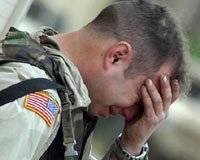
I admit to being obsessed with the subject of Post Traumatic Stress Disorder (PTSD). Post-traumatic illness could teach us a lot about how humans function and cope or dysfunction and become essentially demoralized under extraordinary stress. From the biopsychosocial perspective PTSD may very well help us to understand what happens to our brains when “critical mass” is reached and our tolerance for trauma is exceeded. Furthermore, PTSD may be a psychiatric harbinger of the toll that trauma and excessive stress is taking on society and how certain vulnerable individuals, much like childhood survivors of physical and sexual abuse, can end up becoming both self-perpetuating victims and perpetrators.
While we are right to be concerned about the economic cost associated with running a large first world country and waging various wars (on drugs, on terrorism, ISIS, etc.) shouldn’t we be equally concerned with the psychological and physical costs and consequences resulting from what government officials euphemistically call unavoidable “collateral damage”? Such military speak doesn’t begin to do justice to the actual reality of those thousands of civilians killed and wounded, families displaced from their homes and ancestral homelands, and the mounting number of returning soldiers with severe physical injuries and PTSD. Sure there is a lot of lip service paid to helping and supporting our courageous “wounded warriors” but all the parades, handshakes, brain scans, robotic arms and Starship Trooper prosthetics in the world will not adequately repair the damaged psyches of combat veterans with deep psychological wounds and moral injuries at the soul level.
What we know about trauma and PTSD is still far exceeded by uncertainty about how best to treat them. What we know is this: individuals can fall into a prolonged state of anxiety, depression, pessimism and despair after having exposure to experiences perceived to be either life threatening or serious enough to shatter their belief that the world is safe and sensible (sense of meaning and coherence). Put another way, certain people whether on the battlefield in Iraq, following a nasty prolonged divorce/custody battle, or a particularly horrific automobile accident can lose their fundamental sense of security and their belief that their daily existence is not one of continual threat and that their current situation in life lacks sufficient hope, purpose, positive meaning, and what researchers now call “narrative coherence.” Consider an insecure deeply depressed or suicidal teen who has not only failed to reach sexual, physical or psychological maturity but also views their own life as hopeless and therefore represents a failed “life story” with no redeeming value. Sometimes psychological trauma can result from an acute catastrophic incident, but more often it is an accumulation of these types of “self” shattering experiences that have reached their tipping point.
In addition, such an extreme breakdown of perceived safety, integrated sensorium and personal sensibility is accompanied by the inability to “work through” (ie., mentally and emotionally process) the traumatic event(s) necessary for long term adaptation and recovery. PTSD sufferers are essentially stuck in a mental movie theater randomly replaying the horrific memories, stress arousing stimuli and sensory triggers associated with their initial trauma.
On a neurobiological (brain) level there is growing evidence of a persistent dysregulation in the HPA Axis stress response. Instead of returning to a baseline level of physiologic arousal, PTSD leaves the body-mind in a tense state of hypervigilance and hypofunctioning. To be stuck in a physical and emotional state of “fight or flight” is essentially hell on earth and somewhat similar to what it feels like to be having panic attacks and extreme anxiety 24/7. Unlike previous models explaining the normative stages of grief, loss, and recovery, ie. Kubler-Ross, etc., those with PTSD are often unable to reconcile conflicting thoughts and feelings about their traumatic experience(s)and have not managed to achieve a final state of understanding and acceptance.
Life-threatening and/or life-altering events of this magnitude may also lead to a co-existing moral or spiritual injury. This may include a loss of “faith” or abandonment of ones former instrumental values and spiritual principles such as a belief in God, karma, justice or a higher power. Again, the injury to the mind-body is accompanied by trauma-induced changes in self/identity-supporting beliefs about life, death, and oneself. Such core values and beliefs have either been proven wrong by the trauma experience or challenged over time to the point of one no longer trusting life to be comprehensible, manageable, or meaningful. Issues related to anger, trust, shame, forgiveness, intimacy, love and sexuality are often negatively impacted. Extreme negative thinking, an external locus of control and pessimistic or fatalistic thoughts can lead to the formation of an overly “negative mind” or a kind of “confirmed negative condition” in which subsequent life events and experiences are either misconstrued as highly negative or perceived as too aversive and therefore avoided at all cost.
Complex PTSD involves repeated trauma, neglect and abuse (physical, mental,emotional, or sexual) often beginning in childhood. Both PTSD and Complex PTSD are sometimes further reinforced by feelings of self-blame and shame associated with their trauma. Concomitant social alienation, sense of betrayal or abandonment by primary caregivers, life partners, authority figures, friends and professional services, ie., parents/family, the VA, the government, etc. add to the severity of PTSD and it’s duration by increasing the loss of needed external support and decreasing the internal dimensions of adaptive coping and coherence needed for recovery. It’s obvious to me that a treatment approach relying purely on pharmacological intervention in the form of over prescribed barbituates, sleeping pills, opiates, and sedating benzodiazapines, etc. are doing these brave PTSD survivors and war veterans a tremendous disservice and more likely just adding to the trauma they feel by furthering their personal sense of physical and mental dissociation and dis-integration. Trapped in such a horrific state of fragmentation, those with PTSD often are left expressing a single common sentiment, “You just dont understand!” They’re absolutely right. We don’t and we need to do much better.

 captaincliff
really worthwhile read, captaincliff!
Thanks Deb….and you you tickle the ivories pretty good too!