

With apologies to Game of Thrones addicts (I personally don’t over-imbibe), success in politics has historically relied upon barbarian despotic leader dark triad like attributes such as bribery, intimidation, assassination, corruption, and big time power-wielding often reflected in ones ability to use special access, back room influence, connections, and leverage among others who hold substantial power and authority. LBJ is a good example of an “old school” politician…and that might even include the assassination part. My sons tells me one of their favorite TV series Game of Thrones (GOT) similarly gets “down and dirty” as far as backstabbing, collusion, betrayal and the proverbial “heads will roll” approach to becoming the ultimate “top dog”.
For many reasons this formula has changed somewhat over time to one that depends more on the use of ones personal charisma, likability, and ability to connect (ie.,reciprocal projection) with the largest base of voters possible. This would now also include voters with “grassroots” as well as old school “power broker” ties. While ambition and extraordinary drive have always been positive factors, winning a presidential election today requires someone with endless ambition, remarkable energy and a mental/emotional manufacturing plant of money, unabashed ego and supreme self confidence operating 24/7. Based on the above, Donald Trump exhibits all the “right stuff” whether you like him or not. Hillary Clinton, on the other hand, while well suited to the actual on-the-job requirements for POTUS, stumbled badly by choosing to not see or address certain polling related bad omens early on and refusing to listen to related warnings shared with her by her philandering consort/quasi-hubby/former President Bill Clinton…a pretty sharp and charismatic political player himself. As a result, she was outplayed on the last major presidential campaign battlefield.
I am suggesting that Donald Trump who is often seen as an unusually vain village idiot very well may have various Julius Caesar like attributes that Hillary lacks.
In Game of Thrones vernacular, you don’t need a Valyrian steel sword if you’ve got Julius Caesar’s “tiger blood” DNA. Sad but true.
Read below two separate psychobiographical summaries of the unlikely Emperor Julius Caesar and note the specific ways (like it or not) that Donald Trump holds a much closer resemblance than wonky intellectually gifted Hillary Clinton. Even the Republican establishment didn’t see THAT coming.
Analysis #1: Traits/Qualities Julius Caesar Possessed that Led to His Remarkable Success
Street Smart Intelligent and Self-Confident
First and foremost, Julius Caesar, the Roman general and statesman who upended the Republic and it’s laws, was a smarty pants unto himself, especially in military strategy. His supreme self-confidence, bordering on delusional narcissism was an important reasons why he was so successful. Caesar was a compelling speaker when he needed to be. When he was addressing the Senate or the public, Romans hung on his every word. His critical and decisive mind was especially beneficial during his military career. He specifically planned and strategized to outmaneuver his opponents. Essentially, like Trump he didn’t care about the “poll numbers”.
Julius Caesar: Endlessly Energetic
In addition to being clever, Caesar was incredibly energetic. As the governor of Gaul, Caesar was able to fight wars for seven years while also writing a series of books recounting his many escapades. During his life, Caesar traveled non-stop. Whether he was fighting a war or simply visiting a Roman province, he was constantly on the move and seemed to need little sleep.
Caesar’s energy was also evidenced in his romantic exploits. Over the course of his life, he had three wives and multiple mistresses. Imagine taking over a country, fighting multiple wars, AND juggling several girlfriends at the same time. The man never tired! Sound familiar?
Julius Caesar: Cunning Yet Generous
Immense military intelligence and energy were not the only qualities that made Caesar a formidable leader. He was also exceptionally driven, power-hungry, and cunning. Caesar came from a noble but relatively poor family. What Caesar lacked in funds he made up for with an insatiable thirst for power. Every action was calculated for personal gain; nothing he did was without purpose personally.
For example, when one of his greatest political opponents died, Caesar went out of his way to memorialize the man. Later Caesar acknowledged this was done not because he liked him or thought he was a great guy but because Caesar knew that speaking well about his fallen adversary would help neutralize his opponents posthumous influence.
Aside from being cunning, Caesar was also exceedingly generous, bestowing lavish gifts on the people closest to him. He gave his mistress, Cleopatra, her own palace in Rome. Additionally, he showed unusual mercy to the people he conquered and spared many of the political opponents he defeated. Sound somewhat familiar?
Analysis#2: Julius Caesar: Personality Type Analysis
Caesar.jpg
Gaius Julius Caesar was a Roman aristocrat, politician, military leader, Dictator, and author, active in the last decades of the Roman Republic, in the first century BC. His impact on western history is enormous: he was chiefly responsible for incorporating Gaul (i.e. modern France) into the Mediterranean world i.e. the Roman Empire, as well as indirectly for the same with regards to Britain. The modern calendar, based on a year of 365 days with a leap year every 4 years, and 12 months, is essentially the same one as introduced under his instructions. The month ‘July’ was named so in his honour, after his clan name ‘Julius’, immediately after his death. His family name, ‘Caesar’, eventually became a synonym for ’emperor’, surviving into the 20th century as ‘Kaiser’ and ‘Tsar’. He is also generally regarded as one of history’s greatest military leaders, his battles serving as case studies to this day.
Although by ancestry belonging to the high nobility – Caesar’s family was (relatively) impoverished by the time he was born in 100 BC. In the ultra-competitive, expensive, high-stakes world of Roman politics of his time, that meant that Caesar, not withstanding his titled family background had to adopt unconventional means of advancing his political career from an early age.
Especially considering his circumstances and powerful opponents, Caesar’s political career was extraordinarily successful, with him advancing faster, and to much greater heights than any of his contemporaries, even those far wealthier and better connected.
Simplistically put, Caesar’s whole career progressed on the basis of all-or-nothing extreme risk-taking. In electoral politics, that meant spending money far beyond his means, getting into debt to the point of criminal liability – but always rescued later by electoral or military success. Failure at any point could have meant bankruptcy, disgrace, and exile: famously, at the age of 37, he bet it all in winning the election to Pontifex Maximus, telling his mother that day that either he’d win or have to go into exile. Once again sound a little familiar?
Likewise, as a military leader, his style was to get himself and his men into very difficult situations (numerical inferiority, poor logistics, unknown and hostile territory, etc.) and then use tactical brilliance and in-the-moment improvisation to find a way out – always with supreme self-confidence in his own abilities and, as he himself put it, “Caesar’s luck”. In so doing, he re-invented ancient warfare as he went along, even in situations where he had no previous experience, as in siege warfare (Alesia) or urban warfare (Alexandria) or in more conventional battles (Pharsalus). This meant that more conventional or cautious commanders such as Pompey were outmaneuvered by Caesar even when they held in numerical and tactical advantage.
Caesar obviously trusted his in-the-moment tactical improvisation and often neglected the accumulation of available military intelligence, as in his first expedition to Britain. That almost led to disaster as he simply did not realize that the Channel tides were far more intense than those of the Mediterranean. Trump much?
Caesar’s never-ending, sometimes even reckless pursuit of political power, as well as his natural ability to lead (along with his confidence in his own assessment of the likely outcome on the battlefield) demonstrate a “fearlessness” that few possess. This is also confirmed by his apparent lack of physical fear even in very disadvantageous situations, such as when he was kept prisoner by pirates (he mocked them and said he’d crucify them as soon as he was set free…which he did). Talk about a penchant for “get back”. “Revenge is sweet” could have been his middle name.
As a leader of men, Caesar was notorious for not caring about imposing discipline on his men in the way of protocol and accepted rules: what he cared about was their loyalty, obedience, competence. and trust (i.e. willingness to follow him into seemingly hopeless situations). His leadership was based not mainly on the fact that he was their hierarchical and social superior, but that he was “trusted” to be better than they were at being the principal leader and therefore deserved to be followed. Alexander the Great may be his only historical peer in this respect.
Caesar’s extreme confidence can be seen in his own memoirs of his conquest of Gaul, when he repeatedly boasts of his personal relationship to the Gallic chieftains (and complains of those who couldn’t be trusted). It can also be seen in his approach to political enemies: Caesar was so confident in his ability to gain the trust of those he had defeated that he preferred to pardon them and receive them as friends once they were vanquished. Now it’s getting almost scary as far as Trump comparisons are concerned!
Caesar’s pursuit of personal political power and wealth, besides based on extreme risk-taking, was also based on ignoring accepted societal conventions and rules, even laws. His approach was to achieve his goals, regardless of their difficulty and worry less about such “details”. The problem with that is that his continuous illegalities led to him being liable to prosecution by his many political enemies. Like his near-disastrous self-imposed military traps, that was a longer-term personal trap that he allowed himself into (arguably without realizing it) leaving him no way out except through his ultimate extreme gambles i.e. illegally invading Italy proper with his legions, characteristically saying “let the dice fly” as he did so.
Having achieved (illegal) control of Rome and Italy through sheer military power, Caesar was concerned about legalizing it but he did so in a seemingly ad hoc manner, becoming at first Dictator for just a few days, then consul, then later Dictator again in different ways – as with military campaigns, all done in a ‘making it up as you go along manner’ and apparently having less concern with legal precedent or consistency. By now the Trump comparisons probably make you think I’m making this shit up. Im not. Look it up.
Although chiefly concerned with completing his victory over his political enemies, during his period as Dictator, Caesar engaged into a series of isolated reforms: a settlement of the debts of over-indebted individuals, urban reform in Rome, reform of the then-chaotic calendar (introducing the modern calendar), reform of the supply of subsidized grain, etc. All of those were implemented with enormous energy in a very brief period of time, but rather as a series of isolated measures aimed at fixing specific economic problems pragmatically, not as part of any ‘restructuring’ of Roman society or constitution. Indeed, despite his own position having become essentially extra-constitutional, Caesar showed no apparent interest (or idea) of how to adjust the Roman constitution accordingly, and at the time of his death his plan was to start another huge military campaign, against Parthia (Persia). This shows where his true priorities lay.
Conclusion: Julius Caesar was a man most focused and able, and an ultra confident individual, particularly in matters of career climbing, military exploits and eventual conquest (winning). Almost always he succeeded in an unorthodox way where extreme (and sometimes almost disastrous) risk-taking was the pattern, and with little sign of longterm strategy or overarching vision. In fact, in most matters he appeared to lack any visible ‘ideology’ (except that of his own rising to the top).
Finally, besides being supremely confident in his ability to get the respect and trust of key individuals, by all accounts he was the “perfect politician” in terms of knowing the value of self propaganda and in exercising enormous personal charm, especially when he wanted to and/or needed to.
There you have it. Game of Thrones much? Only in the real world there are no dragons, elves or clever dwarves like Tyrion Lannister to bring much needed balance, fairness, negotiation, humor or even a humane perspective to a vicious dog eat dog world.
Notwithstanding my love of the run on sentence, My Facebook friend Wendy has challenged me to write a 300 word max essay utilizing the following words she randomly pulled out of her ass: distended, lugubrious, flaccid, notwithstanding.
The Dump
I wade into the fray with clearly more disciplined and professional writers. My stock and trade is the perverse, what others consider the dark side of the naked city. I write about dicks, pricks and assholes. Sure Donald Trump is all three but besides his swollen bobblehead I prefer to author twisted but anatomically correct diatribes about penises, sexual behavior and bowel movements. I do this for my own exhibitionistic pleasure, for lack of regularity within my own sluggish and distended intestines and because even tho it’s Stargate 2016, the average Millennial in skinny jeans is an idiot savant who can’t locate Afghanistan or his own anus without a GPS, a specialized phone app or a text to his helicopter mommy. God forbid they might actually get their hands wet by reaching into the toilet bowl of life and learning how the world really works. I’m sure the White House is metaphorically no different. The real shit goes on in the musty smelling, dark cobwebby basement where CIA operatives, Morlocks, and Cheney clones with wrenches scuttle around fixing furnaces, turning dials and planning the takeover of foreign governments.
Sometimes I fear we’re raising a new race of flaccid spawn with beehive minds. They are the Eloi in the original Time Machine movie. Sure they have books but they’ve never read any. Intelligent ideas or independent thought that includes debate and challenging discourse is as rare today as a single succinct sentence in my legendary pirate blog. Call me cantankerous. Call me lugubrious. I call it as I see it which apparently is a lot better than most umpires in professional baseball or football. Did you see that missed pass interference call in the Atlanta Falcons game recently? Now imagine Trump and his minions at the wheel of our nation. I’d call that demolition derby-type game “Narcissism Nascar” and that’s one sport I’d rather sit out and patiently wait for a cathartic dump of biblical proportions.
“Your assumptions are your windows on the world. Scrub them off every once in a while, or the light won’t come in.”
― Isaac Asimov
“If others tell us something we make assumptions, and if they don’t tell us something we make assumptions to fulfill our need to know and to replace the need to communicate. Even if we hear something and we don’t understand we make assumptions about what it means and then believe the assumptions. We make all sorts of assumptions because we don’t have the courage to ask questions.”
― Miguel Ruiz, The Four Agreements: A Practical Guide to Personal Freedom
I’ve written a few previous blogs about “human error” and how when things go wrong, i.e., ships collide, planes crash, monkey viruses go rogue, or people freeze to death on Mt Everest, it’s usually due to many different reasons with human factors often occupying the primary explanation. It’s difficult to overcome ones cognitive biases, unbridled ego and limited perspective. Most of the time we proceed in life believing that we are “right”. However, personal blinders when combined with a refusal to solicit adequate objective feedback/input from others leave us vulnerable to making false assumptions, inaccurate conclusions and expensive mistakes. Luckily, not every error we make is of the size, cost or consequence of a Challenger Space Shuttle disaster. For that matter, the majority of our human “boo-boos” pale in comparison to monster mistakes like the sinking of the Titanic or George Bush’s decision to get us embroiled in a trillion dollar war on the basis of non-existent WMDs. In light of this topic and introduction I’d like to illustrate the concept of “human folly” by sharing a very small but pertinent example I just read about in the Atlanta Jewish Times.
I heard that both restaurant locations (Sandy Springs and Decatur) of Seven Hens the Chicken schnitzel eatery are closing. Honestly, I was surprised they lasted more than a year given that I counted only three paying customers there in over 2 years and their festive theme was “Come Enjoy Chicken Schnitzel around the World”, not exactly a culinary concept I’d pay an ad agency a lot of dough to think up. However, given Seven Hens longevity I began to wonder if the place was really a front for the Ukrainian Mafia who were selling kilos of cocaine and young girls out the back door. I developed this theory partially because the one guy I did see there more than once (besides the cook) was a tall gentleman who looked a lot like Liam Neeson in the “Taken” movie series. However, I was wrong. Apparently so was the Israeli owner/founder Michael Gurevich who according to the AJT article “lacked restaurant experience” but fervently hoped that the South would “embrace schnitzel and enable me to franchise it”. Riiiight…. He would have been better off franchising sweet tea and Nascar decals. Let this be a lesson to all of us. Even Israelis, the supreme innovators and entrepreneurs on planet Earth are capable of being misled by their own cultural blinders and flawed logic. The good news is that the Decatur location will be replaced by a Korean street food emporium and the Sandy Springs space has already become the Poke Bar, a Los Angeles “casual seafood/raw fish concept”. I look forward to trying them both out before they close as well. As for Donald Trump, I feel semi-confident his “goose is cooked” and like his licensed brand of “commercial quality” steaks which no longer exist, he should probably pack up his presidential snake oil products and declare bankruptcy , which is the same as saying he “lost” but is far easier on his forked tongue.
Post Election Addendum: It seems I was wrong about that one too. My bad….
I just got back from a mini-high school reunion in Highland Park, Illinois. It’s been 45 long years since I left that cushy upscale suburban enclave near Chicago to seek fame and fortune elsewhere. I returned at age 62 (soon to be 63) not as the prodigal son, but as a wiser and definitely more arthritic version of my former self. My long hair is now long gone. The hippie-esque bell bottom jeans and puka shell necklace have been replaced by clothes meant to produce a subtle “slimming” effect”. My wise-ass attitude, rapid fire sarcastic speech and sometime condescending voice tone have given way to a sincere interest in hearing about my high school peers and learning about their lives. It seems we’ve all been on some epic journey and like Odysseus have returned home bruised and battle weary but with quite a Homeric tale to tell. The fearlessness and You Only Live Once (YOLO) type thinking endemic to youth is now tempered by a host of health concerns common to aging Baby Boomers including free floating anxiety, i.e.,”Gee, I wonder if I remembered to feed the dog before I left?” or “hey is that lump under my armpit?” and even worse by the realization that some high school classmates have passed away or are currently suffering from illnesses which they may or may not recover from.
How can this be? I thought we were immortal like the Greek Gods we studied in freshman English class. I thought life was going to be a relatively predictable affair, a linear trajectory like climbing a ladder or taking a long hike on a reasonably well marked trail in one of the many forest preserves in or around Highland Park. I knew it wasn’t going to be easy but I figured I was well prepared not just by my excellent education at Highland Park High School but also by my mastery of “life-like” board games including Risk, Monopoly, Stratego and Life. How much tougher could the adult world be then all those plastic cone obstacles, confusing road signs and simulator tests we’d already faced and overcome in Coach Wisniewski’s Drivers Ed class? Maybe I should have noticed other more subtle “signs” like how in the board game “Life” with it’s twists and turns and plastic cars full of acquired family members certain peg people would fail to stay in their designated peg holes and repeatedly fell out onto the increasingly cluttered game board. Were those Parker Brother type premonitions about some future divorce, death in the family or need to send an unruly kid to residential care or rehab someday?
Regardless of the many games I played, at age eighteen I still believed life was going to be a predictable algorithm not too different from any of the card or board games we played back in the day: deal the cards, play the odds, buy up property, stocks, utilities, and other important material “stuff “, or just assemble a vast army and proceed to “take over the world” (win). Now that I say that aloud it sounds silly but also suggests that certain individuals (like Donald Trump) are likely still stuck in their immature teenage head… seeking to “win” at all cost while munching on pretzel sticks, sugar cookies, Hostess Twinkies and playing some megalomaniacal Parkers Brothers game in a friend’s dark dreary wood paneled basement. Unfortunately, at age 62, I’ve also learned it’s not quite that easy to “win” like that in the real world and many of us don’t have the time, energy, bank account or endless reservoir of narcissistic supply necessary to lose a billion dollars like Trump in one year…or even eighteen billion. Furthermore, to then consider that experience as somehow “brilliant” is a delusional despot bridge too far for most of us. In the end, however, accepting the various ups and downs of a meaningful life still rather early in the fourth and final quarter of the “game” (of real life) is quite acceptable to me. Frankly, at this point I’d rather be hanging out with my close high school friends talking, eating Chinese takeout or deli food, and swapping funny stories than be a Pol Pot or POTUS. That said, maybe I did learn a few good tricks and pertinent life strategies playing ‘Risk” at Billy Terman’s house with Mark Scher, Joel Pathman,Todd Logan, Mike Lembeck, and Harlan Bass while Bill’s highly oversexed schnauzer Skipper tried to hump our legs ….but that’s a whole ‘nother story or at least another CaptCliff blog.
Submitted for publication to: The Good Men Project 9/29/16

Introduction: Lately there’s been a lot of talk about toxic masculinity and male privilege. Old school narcissists with tiny hands like Donald Trump are as bad an example of mature masculinity as Anthony Weiner who cant seem to keep his Gen X pecker in his pants and fingers away from his cell phone camera. Both of them protesteth too much as far as promoting themselves as “manly men” who carry a “big stick”. Me thinketh they both suffer from male-patterned insecurity cultivated in an unusually competitive capitalistic society and cutthroat sociopolitical state.
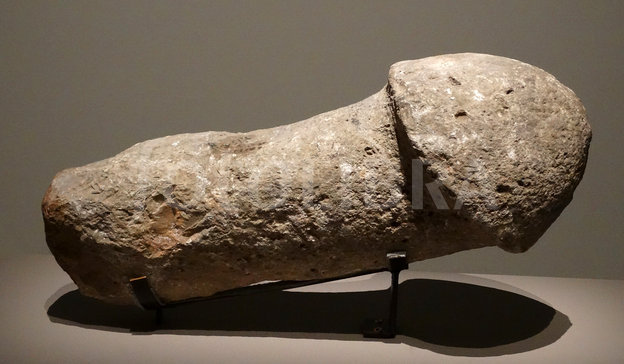
Historically, patriarchal cultures and patrilinear societies like the Roman Empire tend to be insecure about their political fate and sexual potency. Historians remark how obsessed ancient Rome was with “the penis motif” (otherwise known as the “dick”) and wonder why such an advanced civilization felt the need to install phallic symbols everywhere for protection, good fortune, and/or as conveniently shaped street signs. In contrast, my approach to men and masculinity applies broader and less “genital-centered” principles to address sex-related problems. Focusing too much on the penis either in therapy or in life can only lead to a bad case of performance anxiety, genital warts or penis envy a la Siggy Freud. As an older clinical psychologist and sex therapist of the male persuasion (62 years old) I hope to have gained (in addition to the proverbial extra 20 lbs “spare tire”) a few distinct advantages as a result of my longitudinal life experience. This includes but is not limited to such things as “hindsight” and a “big picture” perspective. It also means I’ve gotten my cocky male narcissistic butt kicked around enough times to know what humble pie tastes like. It’s rather tart in fact. Trying too hard to be the biggest and best at everything including sex can end up having the exact opposite effect on ones ego and externalized sex organ. In other words, it’s not just the grass that appears greener and possibly grander when you look too close at what others possess in the locker room or the Imperial gladiator ring. Personally, I say “thank the Gods” that there are other human attributes to focus on as we age besides ones penis length to offset the enlarged prostate, progressive baldness, hearing loss, and my total invisibility to any woman under the age of 50 at Starbucks.
Developing the psychological maturity necessary to experience and express emotional vulnerability, profound love, loyalty, compassion, receptivity, and empathy are not booby prizes in the sexual revolution or so-called battle between the now somewhat indeterminate sexes. Such qualities help to define our humanity and may represent the golden keys to freedom from an insidious form of male genital-centered slavery and oppression, something that has hindered both men and women alike for thousands of years. Hey, I am Spartacus!!


“Shit happens” is a common colloquial expression that many people intuitively understand and can relate to. However, far fewer people go on to inquire, “well, why did that particular shit happen?” Bear with me on this question because I suspect this will not be real easy to explain. To some extent, bad shit like major disasters, catastrophes, and fatal accidents continue to remain shrouded in mystery and myth for many people. Especially in the past (but sometimes even today) God, superstition, rumor and outright confabulation somehow become part and parcel of the disaster narrative and end up confusing the scientific analysis and rational explanations. In other words, what we think we know is usually not completely true and we often continue to assume its truth/veracity based on ignorance, cognitive rigidity and consensual agreement with other misinformed souls.
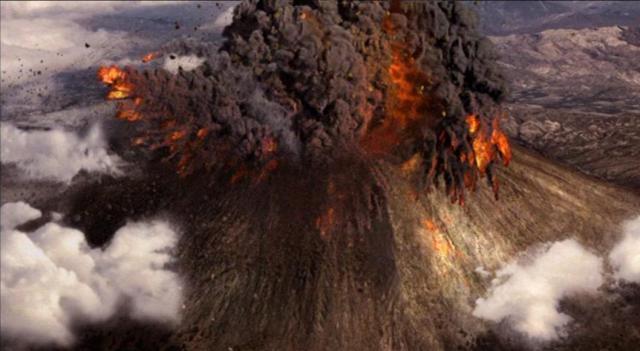
For example, I happened to recently watch a documentary about Pompeii on TV and realized for the very first time that the perfectly preserved remains of the townspeople caught in the violent volcanic eruption of Mt. Vesuvius were actually (for the most part) not “bodies” or complete skeletal remains but reinforced casts (like a plaster mold) made by a certain individual in the late 1800s. So much for my childhood fascination with 2000 year old dead Romans buried alive in volcanic ash and frozen in their contorted death agony for all eternity… Somewhat related is the longstanding and relatively common assumption that when REALLY BAD SHIT happens like a biblical flood or giant plague of locusts, etc., it likely involves supernatural causes that are basically inconceivable and unknowable. To “know” or understand such cosmic or divine proportion events is usually reduced to believing what the BIG BOOK (or Pat Robertson) tells us…otherwise we too might get turned into a pillar of salt. While such interpretations of why shit happens often fall under the basket category of, “God did it so dont ask for a repeat performance” they also may inspire a kind of scientific laziness, learned helplessness and general surrender to the “mysteries of the universe”.
Second, it is a fact that when shit happens it often involves complex reasons and multiple interacting variables that are difficult to assess. Large airplanes are known to disappear off radar screens never to be seen or heard again….right? Nevertheless, human beings very often need and want simple answers in their pursuit of what they erroneously perceive as “closure”. Let’s face it. Hitler alone did not cause (or carry out) the Holocaust. As a result, those desperately in need of answers are sometimes willing to entertain highly unusual or unlikely simplistic explanations… like UFO’s, the Bermuda Triangle, and various other creative or nefarious conspiracy theories. I call this the “Alien Meets Big Foot Syndrome”. It’s more difficult to acknowledge that many answers to unexplained or catastrophic events are not easily obtained due to the difficulty and expense involved. Identifying reasonable primary determining factors and teasing out spurious or confusing interaction effects, hidden or confounding secondary variables is arduous and challenging at best. The additional presence of changing/dynamic conditions that alter statistical equations, prediction models or forecasts make scientific investigation even more difficult to conduct, calculate and control. That’s one reason why pharmaceutical companies can get away with a lot of their rather weak clinical data “proving” their drugs effectiveness even tho the placebo effect is often almost as good. Things tend to change and replication studies are rare.
Recently, I was able to come to a better personal understanding of this “why shit happens” topic after watching the movie “Everest” on cable television and then reading a journal article about this same event. Somehow it helped me (both practically and metaphorically) to first view a dramatic recreation of this literal shit storm involving two professional climbing expeditions that met disaster on Mt Everest in May of 1996. Through watching the dramatic story along with the unfolding sequence of related events I was better able to grasp the unique context involved as well as the interplay of multiple determining factors, both human and otherwise. In any catastrophe or major disaster, whether it is the sinking of the Titanic, the Challenger Space Shuttle explosion, or the more recent mass shooting of innocents in a gay nightclub in Orlando there is an unseen “flamenco dance” of contributing factors, mathematical probabilities, dumb luck (or lack of) and Final Destination-like fate/destiny playing out in real time and space. In other words there apparently is such a thing as being in a really bad place at the very wrong time. Such a high stakes poker game, vibrating quantum wave and probabilistic “roll of the dice” (for or against life, death, and survival) is not unlike that which Albert Einstein referred to in his famous (but often totally misinterpreted) quote, “God doesn’t play dice with the universe…” Einstein might have fallen a bit short on the quantum mechanics and spiritual aspects involved in why good and bad things happen but at least he got gravity right. However, messing up with gravity and the need to maintain stability at high altitude/steep descent circumstances can get yourself killed …as was shown on Mt. Everest and more recently demonstrated in the “freak” water slide accident in Kansas City.
The journal article I read (see below) about the Mt. Everest disaster, while somewhat dry and wholly lacking in the aforementioned cinematic suspense, was really the best available scientific analysis of why and how “shit happens” in certain high risk situations. I’ve always been obsessed with survival and “fate” and tried to look at such complex issues from multiple perspectives using various human lenses that include wearing my spiritual and gut intuition glasses as well as my rational and scientific spectacles.Of course it’s important to not get ones viewpoint mixed up. As an example, my ex-wife Rona’s fateful dream several months before she died from Stage4 lung cancer (the one about a wild cat that approached her and needing to make it to “Gate 30” at the airport on time) represented a prophetic and symbolic story line and one that lent itself better to a personal and/or spiritual rather than scientific interpretation. Still, as dreams go it was pretty amazing….
As stated, “shit happens” in life not just for a single reason but for a host of interrelated reasons and explanatory factors. What we call “good luck” or “bad luck” is often just the compounding of many positive and/or negative factors that people are either previously unaware of, somewhat aware of, or completely blind, deaf, and dumb towards. It’s not just that human beings (unlike computers) cant compute or fathom the multivariate nature of complex mathematical probability models, predictive analytics or practical risk factors. It’s also that computers are lousy at utilizing spiritual or intuitive information and tend to filter out what is perceived to be “extraneous” or superfluous data. God (the Universe) on the other hand is apparently capable of factoring in everything and nothing is seen as total garbage. Our limited human minds and egos, somewhat like computers, also have built-in filtering mechanisms (like psychological defense mechanisms, cognitive schemas, fuzzy logic, self-serving report biases and errors in judgement and attribution). Because we are human beings with strong emotional processing systems (rather than purely objective computer systems based on binary coding) there is a general tendency to “drift” toward non-objective thinking, again often in service to our fundamentally hard-wired emotional needs, fantasies, wishes, etc. That’s probably at least one aspect that Sigmund Freud got right abut human learning and behavior (clearly NOT counting the whole penis envy/castration complex thing) .
It’s worth mentioning that it’s probably true that many people live their lives too often in a kind of sub-clinical “flight or fight” mode and somewhat understandably cant seem to stay sufficiently balanced between the need/requirement to initiate change, move, adapt, and take calculated risks with the simultaneous need to stay safe, hunker down, and remain cautious. Essentially we either under or overreact as a result of anxiety and perceived risk (overcorrect) or we fall asleep at the wheel and fail to take adequate precaution, so to speak. On top of all this, as mentioned, the many variables that determine and explain bad accidents and disasters are a moving target of predictable and seemingly unpredictable factors like fast moving ice storms on Mt. Everest or in the case of the kind of “weird news” I report on in my web blog, some totally wacked out crazy person randomly deciding to slit a strangers throat in a grocery store for no apparent reason ( I know, “WTF?”). Talk about bad luck. Either way, such unforeseen events would throw off the careful, all-inclusive multivariate regression and subconscious risk factor analysis going on in our head that is normally programmed towards insuring personal survival. You just dont expect some nut job to kill you while you are testing the avocados for ripeness in the produce aisle.
In the end, more often than not (as amply demonstrated in one of my favorite TV shows “Air Disasters”……(FYI: NOT a great program to watch right before flying somewhere on vacation) it is usually human (pilot) error, mental/emotional factors or excessive stress/fatigue that triggers the subsequent “cascade” of faulty decisions and even mechanical failures that directly lead to bad shit happening like airplane crashes or freezing to death on Mt. Everest. My guess is that Stephen Hawking’s recently publicized “down grade” of humanity’s probable chance for long term survival as a species is at least partially based on his realistic calculation of human error related global extinction events occurring sometime in the near future like climate change, Trump being elected as POTUS or ISIS getting their fanatical hands on tactical nuclear weapons. Black holes arent the only things in spacetime that contain within their basic structure a certain end point that represents the statistical point of no return or “event horizon” as far as survival is concerned.
Bottomline: “Survival” is an interesting “board game” and something we all “play” on a daily basis whether we realize it or not. In an earlier web blog I wrote about my near obsession as a small boy playing with plastic army men. I didnt just play “War” in my backyard or basement like I imagine most kids do or did (altho i really liked blowing stuff up and lighting them on fire) but I would set up “fateful” life or death situations and scenarios with blocks, Lincoln logs, etc. I would carefully place all these little plastic warriors in the various structures and then bomb the living shit out of them with heavy objects. That’s right. I was the Angel of Death, Mt. Vesuvius, Godzilla, the Luftwaffe, Gorgo, the Enola Gay Hiroshima bomber, Robert Oppenheimer, Hurricane Inez, Dr. Mengele, and the deadly Passover Plagues all combined. It sounds morbid, maybe even somewhat disturbed, but I just wanted to see who survived, who didn’t and why. It certainly wasn’t that I wanted to really kill people or someday become an insurance claims adjuster, corporate risk manager or crash-test scientist or dummy. I just wanted to see how placement, preparation, dumb luck, happenstance, probability and various other factors interacted to determine survival and continued life rather than death. Death, I realized even then, was a somewhat unfathomable mystery but survival seemed to be more of a probabilistic enterprise that could be analyzed and understood. Being a big hypochondriac, I should also admit, I even noted and evaluated the little plastic army guys (or Cowboys and Indians or whatever) who were merely “wounded” by virtue of their semi-prone yet still semi-standing positions after my incessant air attacks and ruthless bombing runs. Even as I type this I am watching a military history program on TV about a certain Canadian fighter pilot who for very identifiable reasons became a distinguished flying “ace” in WWII by shooting down over 30 Nazi planes over Malta and surviving it all…only to die a mere three years later in a freak unexplained midair explosion. Apparently in his post-war boredom and brief retirement from military aviation he signed on to help deliver an airplane to Israel during its War of Independence. In my mind such ironic events deserve a formal military salute with an associated rolling of the eyes, shaking of the head and ponderous gaze toward the heavens above while thinking aloud to myself, “Seriously? God, You gotta be fucking kidding me?!!”
pure.au.dk/portal-asb-student/files/…/Lessons_from_Everest.pdf
Horrible and crazy shit happens so often that we are basically habituated to it. We see it as “normal” or just the way the world is. Often it becomes the current “headline” news for the day whether it is a kid getting decapitated on a water slide in Kansas City, somebody getting hit by a bus in New Orleans, or a 4 year-old finding his parents gun in the family car and accidentally shooting himself to death. Sure we might know the basic “why” or “how” it happened but often fail to look at the bigger picture or explore the “details” in the back story to gain a more comprehensive understanding. Typically this would include how certain critical factors tend to combine in Final Destination-like fashion resulting in horrific incidents and human tragedies. For that reason alone it is important (and instructive) to analyze unfortunate events and historical disasters in detail, not for any prurient or voyeuristic purpose but to train ourselves to think through the pertinent “risk versus reward” variables that are ever present in our daily living and so called “pursuit of happiness”. People like to say that “accidents happen” as if to imply that they are unavoidable, but acting blindly or unaware towards the natural forces and inherent risks that exist (eg., like the choice to smoke cigarettes or drive to work in the rain on worn out tires, etc.) is not only irresponsible but potentially dangerous to self and others.
Example #1: Let me make an educated guess here. All of this is conjecture based on early news reports. Recently in Kansas City, a 10 year old boy at a popular amusement park died while riding on an “extreme” water slide. He was sitting in the front seat of a three person raft, probably to get the “full effect” of the highly publicized water-borne ride. He was small and thin even for his young age (10 y.o.). Barely 100 lbs, if even. The other two riders were women making the total rider weight or “ballast” close to or under the minimum combined rider raft weight of 400 lbs. (required to be between 400 to 550 lb). As a result of the steep descent angle, high velocity and marginal to insufficient “payload” weight the raft went airborne midway down the slide and in doing so tore open Caleb’s velcro restraint straps sending him and the raft hurtling upwards into the semi-rigid “safety” cage net. As a result of the upward motion and with the heavy raft below him and the cage above him his neck was broken. Basically, Caleb suffered a near or total decapitation injury that severed his spinal cord and probably killed him instantly. His body continued to float down the water slide directly behind the raft carrying the remaining two female passengers who were covered in blood as well as suffering their own facial injuries (probably as a result of being hit by Caleb’s flying body and/or any sudden and unanticipated contact made with the safety cage/net). In essence, the raft they were riding in was not only insufficiently weighted to remain stable but also was disproportionately “back heavy” (due to the two larger adults riding behind him) pitching the raft’s “nose” slightly upwards as it rode unattached on the cascading water (unlike on a roller coaster). This may have contributed to forming increased wind resistance on the underside of the front end of the raft especially when subjected to high speed (50-70 plus mph) and the steep descent angle sending the entire raft airborne…just like in earlier safety test rides in which sand bags flew off the test raft in a sharp upward direction. In this case, the high strength velcro body straps after multiple previous uses also tend to lose a certain degree of contact adhesion and the “pull apart” tension strength required to make them release/give way (especially under rapid acceleration or high G force) is less than optimal. For that reason traditional buckle devices and seatbelt apparatus are used on high speed roller coasters. A previous rider on the water slide even mentioned that his velcro seatbelt straps had given way by the end of the ride earlier in the day. Bottomline: Yes it was a horrible accident….but it will turn out to be explainable and avoidable.
Update: November 23, 2016 : KANSAS CITY, Mo. (AP) — A 168-foot-tall Kansas waterslide on which a state lawmaker’s 10-year-old son was killed last summer will be demolished once the unfolding investigation of the tragedy is finished, the water park’s operators said Tuesday.